Store closes at 10pm. Tills close at midnight. Which store — and why?
EOD overrun isn't just a staffing problem. It's a signal that something in the till-close process has broken — a float variance, a card batch that won't settle, a cashier who skipped the Z-read. Pulse surfaces it as it happens, not the morning after.
The cost of not catching this.
Overtime compounds silently
Across a 20-store estate, 90 minutes of EOD overrun per store per week is 30 hours of overtime payroll per week — approximately $18,000/year at award rates. Most finance teams don't know this line item exists.
Float variances become write-offs
An unresolved variance at till-close becomes a write-off at month-end. Without knowing which store overran and why, you're approving variances you can't investigate.
Next-day trading risk
A till that closes late may not complete its overnight sync before the next morning's open. The store opens with stale pricing or unpurged transactions — a phantom-void or incorrect-price complaint waiting to happen.
How Pulse catches it.
Z-read timestamp monitoring
Pulse records the Z-read timestamp per till per store. A Z-read running beyond your configured close-by time fires an alert — in real time, while someone can still act.
Batch-settlement status
Card batch settlement is the most common cause of late close. Pulse shows which stores have an unsettled batch and how long it's been pending — your team intervenes rather than waiting for timeout.
Pattern analysis
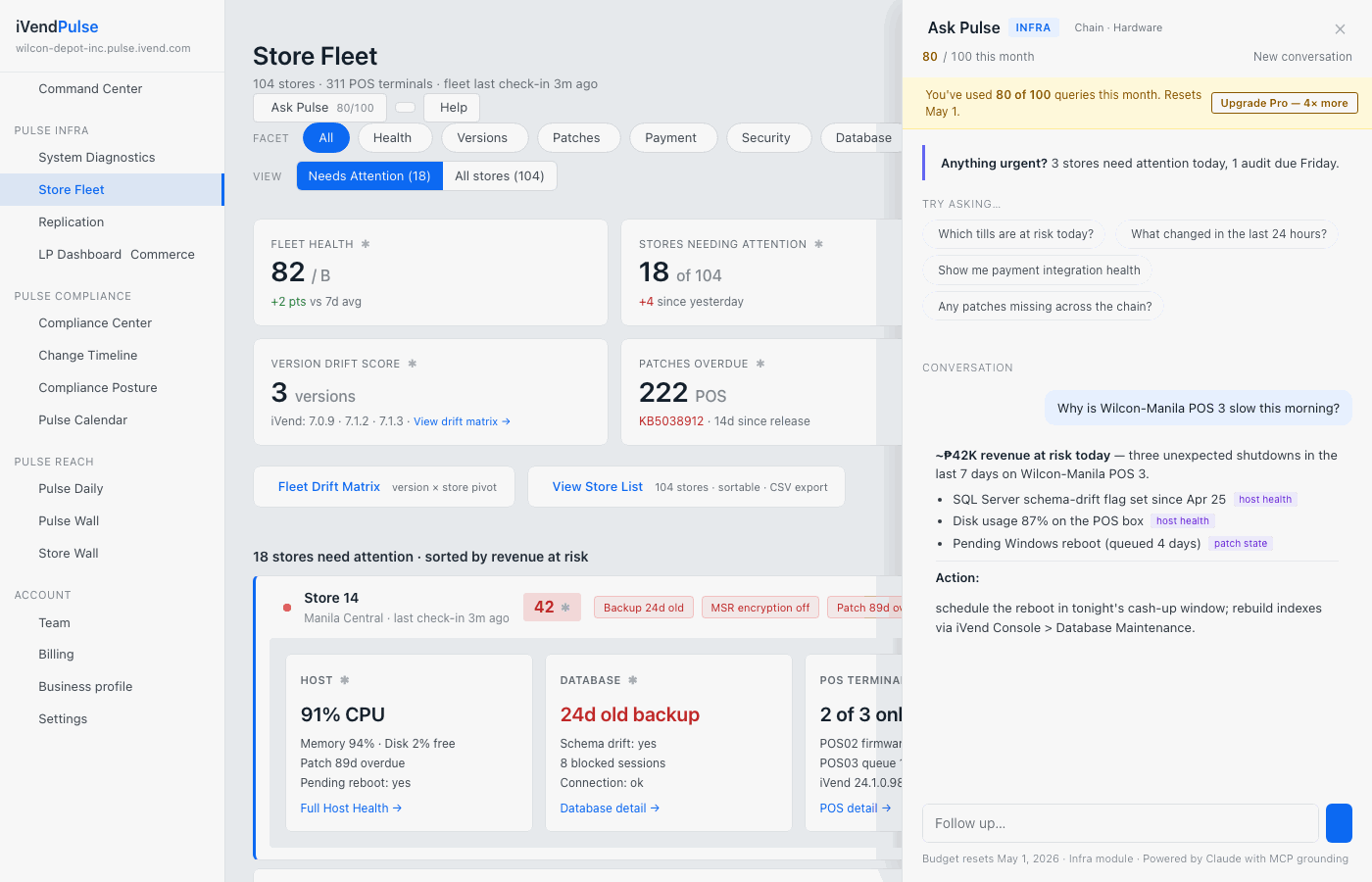
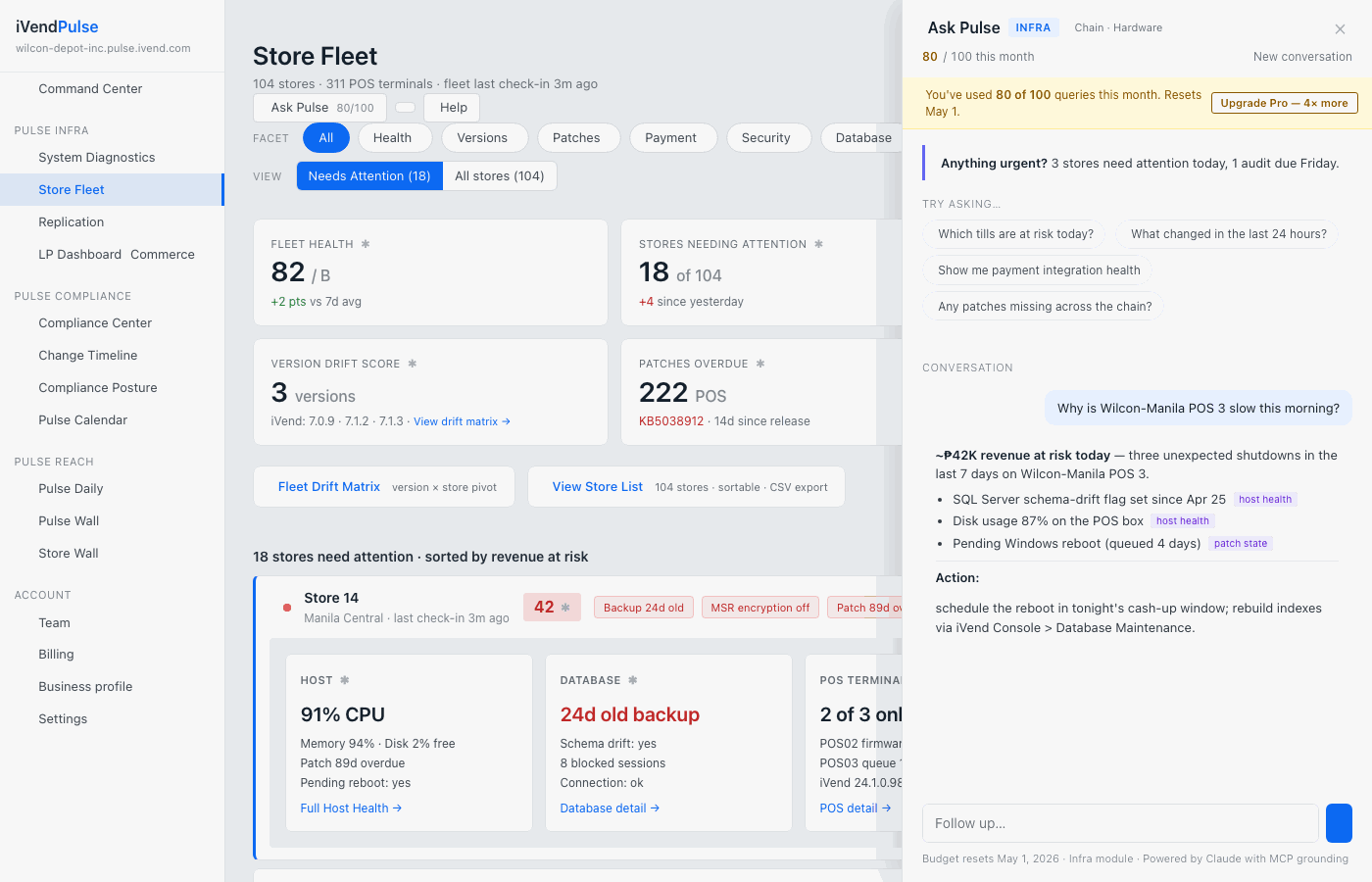
"Which stores have had EOD overruns three nights in a row?" — a single overrun is an incident; three consecutive is a process problem. Now you know it's Store 14.
What you'd see.
Is this your problem to solve?
Area managers own the escalation; CXOs own the pattern.
What it costs.
EOD overrun detection is part of Pulse Infra — per-POS-terminal, billed monthly. Standard tier includes Z-read monitoring and batch-settlement alerts; Pro adds pattern analysis and multi-night trend reporting.
Estimate your monthly cost
Worked example — Chain M (FreshMart)
- 3 Infra Pro seats × $69 = $207
- 48 POS @ Pro band (50 × $7) = $336
- 12 Store Manager seats × $19 = $228
- 1 Compliance Standard seat (bundled with Infra) = $0
- = $771/mo USD