You have 48 terminals. Three are about to cause a problem. Do you know which ones?
Proactive POS fleet health is the difference between a scheduled maintenance window and a mid-trading emergency. Patch levels, EOL calendars, EMV certification, cash drawer health — Pulse gives you the full picture before the store manager calls.
The cost of not catching this.
EOL surprises mid-trading
A terminal past end-of-life loses EMV certification — the payment processor stops authorising cards on that terminal. In a live store. On Saturday. You get the call at 11am.
Patch debt accumulates invisibly
An unpatched POS fleet is a PCI-DSS liability. Requirement 6.3.3 mandates timely patching. Manual spreadsheet tracking misses terminals constantly.
SLA accountability gap
When head office asks 'what's the estate uptime this quarter?' the answer shouldn't be 'we'll check the help-desk tickets'.
How Pulse catches it.
Patch-level inventory
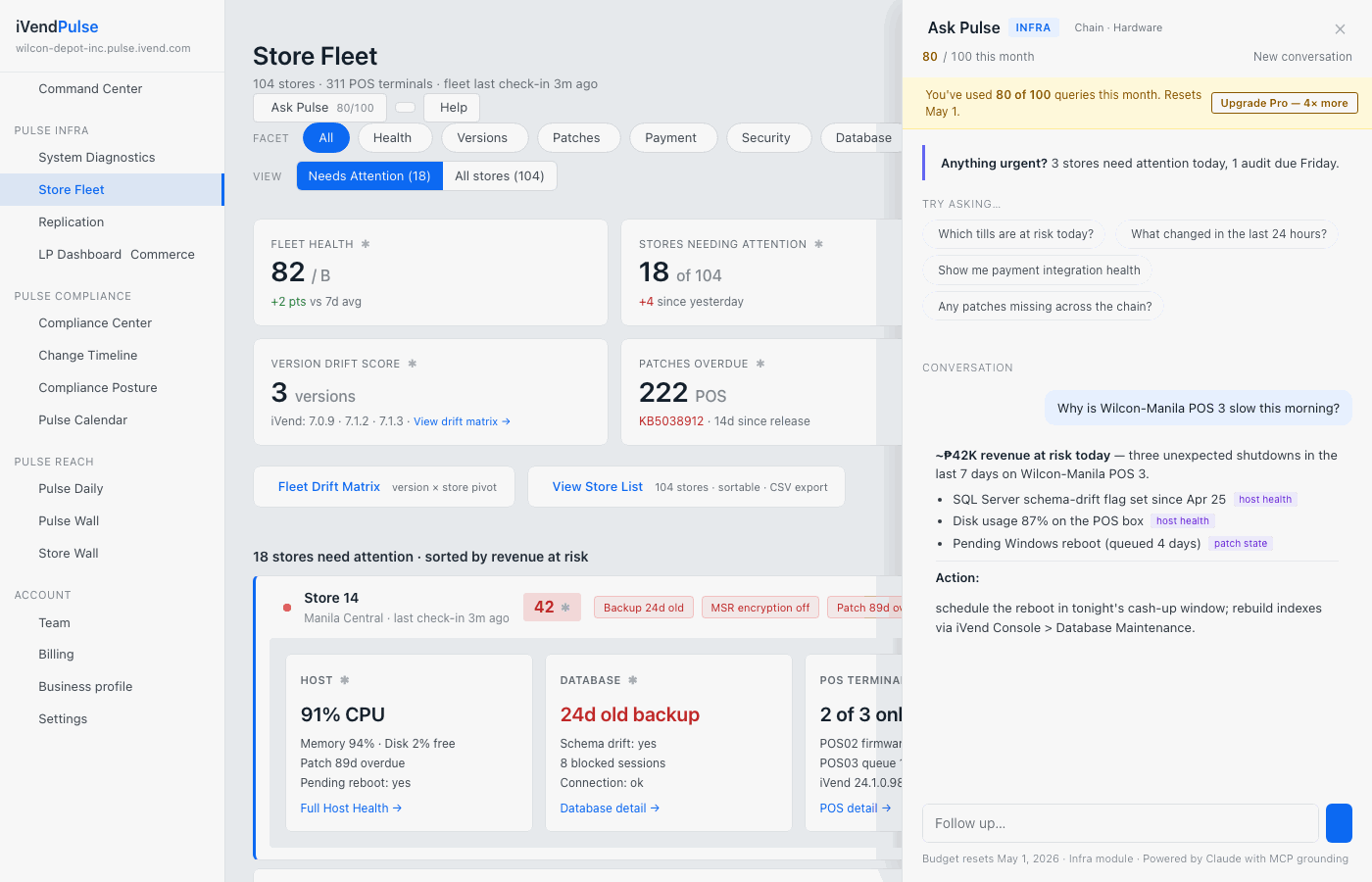
Pulse's edge agent reports the installed software version at every heartbeat. The fleet view shows which terminals are behind the target patch level and by how many releases.
EOL calendar
Pulse maps each terminal model against iVend's EOL calendar. Terminals entering the 90-day warning window appear in a 'watch' tier — planned replacement, not reactive failure.
Uptime scoring
Pulse scores each terminal by uptime percentage over the trailing 30 days. Terminals below threshold get a 'chronic' flag — not just 'currently down' but a long tail of reliability problems.
What you'd see.
Is this your problem to solve?
Fleet health is owned by IT — but its impact is felt across every store.
What it costs.
POS fleet health monitoring is part of Pulse Infra — per-POS-terminal, billed monthly. Patch-level inventory, EOL calendar, and uptime scoring are all included on Standard tier. Pro adds historical trend reports and multi-region rollup views.
Estimate your monthly cost
Worked example — Chain M (FreshMart)
- 3 Infra Pro seats × $69 = $207
- 48 POS @ Pro band (50 × $7) = $336
- 12 Store Manager seats × $19 = $228
- 1 Compliance Standard seat (bundled with Infra) = $0
- = $771/mo USD